Article
Fishbone diagrams: find the root cause of a problem
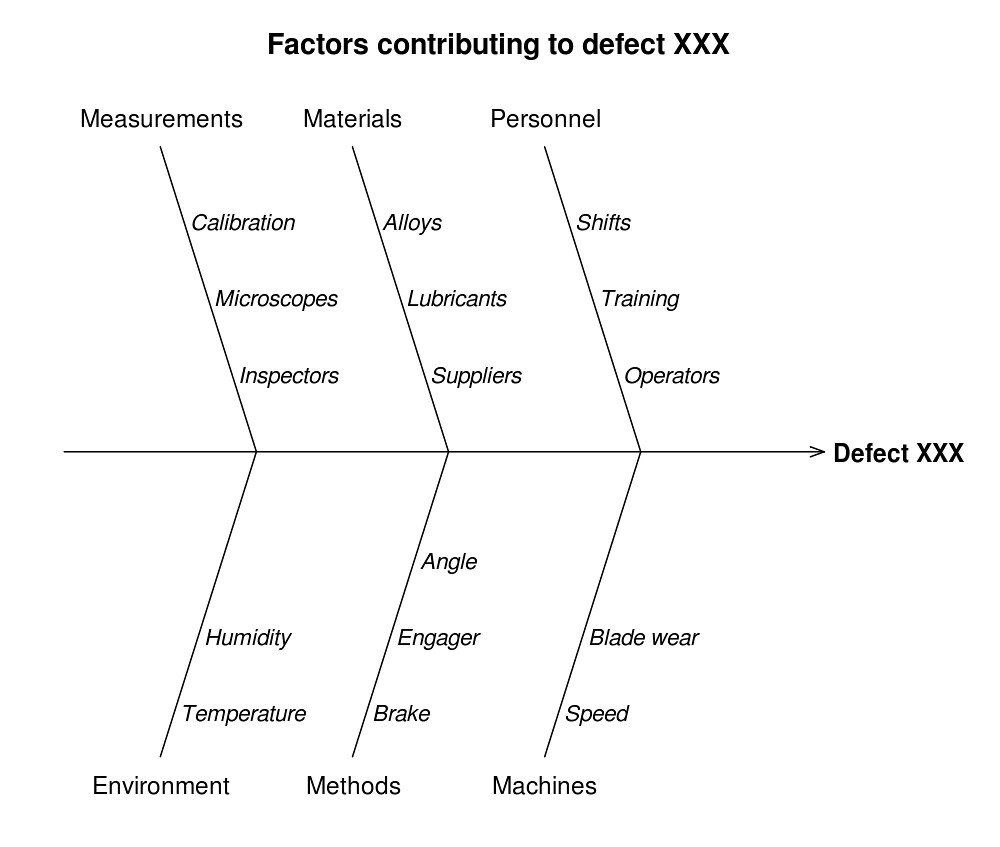
Image: "Problem solving with Ishikawa diagram" by Nguyen Vu Hung (vuhung), licensed CC BY 2.0.
A fishbone (Ishikawa) diagram helps a team work back from a problem to its real causes. Here is how it works and how to build one.
What is a fishbone diagram?
A fishbone diagram - also called an Ishikawa or cause-and-effect diagram - puts the problem at the "head" and groups its possible causes along the "bones". It stops a team jumping to the first answer and helps them find the root cause.
When to use one
- Something keeps going wrong and you want the real reason, not the symptom.
- A team needs to think together about every type of cause, not just the obvious one.
- Teaching problem-solving - a clear frame for "why does this happen?"
How to build one in XenoMind
- Write the problem as the head of the diagram - the effect you want to fix.
- Add a branch per category of cause. A common set is People, Process, Equipment, Materials, Environment and Management.
- Fill in causes under each branch, then ask "why?" again to add deeper causes beneath them.
- Connect related causes across branches where one feeds another.
- Share the link so the whole team can add their view.
Once the likely root causes stand out, you have a short list worth acting on.
Try XenoMind free
Mind maps, flowcharts and spreadsheets, all in one place. Apply for access and start building today.
Apply for free access See how it works